

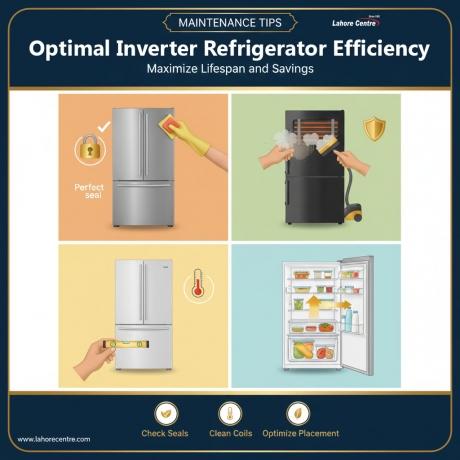
Maximize your Inverter Refrigerator's lifespan & save money! Follow these essential maintenance tips for optimal efficiency from Haier, Dawlance, and Pel models.
Maintenance Tips for Optimal Inverter Refrigerator Efficiency: Maximize Lifespan and Savings
The Inverter Refrigerator is a marvel of modern engineering, designed to maintain consistent cooling temperatures with maximum energy efficiency. Its variable-speed compressor operates continuously, rather than cycling on and off like traditional models, which drastically reduces power consumption and wear-and-tear. However, even the most advanced technology requires regular care to perform optimally. Neglecting simple maintenance can force the Inverter compressor to work harder, negating its energy-saving benefits and shortening the appliance's lifespan. This guide provides essential, actionable maintenance tips, focusing on keeping your unit—whether a Haier, Dawlance, or Pel model—running at peak efficiency. Following these steps ensures your initial investment continues to pay dividends in the form of lower utility bills and superior food preservation, all supported by the expert advice available at Lahore Centre.
Power and Placement: The External Factors Affecting Efficiency
Optimal efficiency begins before you even open the refrigerator door, with the placement and power supply. The Inverter compressor is sensitive to external conditions, and a poor setup can dramatically increase energy consumption.
1. Adequate Airflow and Clearance: Your refrigerator generates heat as it cools. For the compressor to dissipate this heat efficiently, adequate clearance around the unit is non-negotiable. Ensure there are at least two to three inches of space behind the unit and one to two inches on the sides and top. Blocking this space traps heat, forcing the Inverter Refrigerator to run longer and harder, directly increasing power usage. Even if you have a Full Size Refrigerator that is a tight fit in your kitchen, prioritize the clearance space at the rear for ventilation.
2. Protect Against Power Fluctuations: While Inverter compressors are more resilient than older motors, severe voltage fluctuations common in many areas can still pose a risk and disrupt the smooth operation necessary for efficiency. Investing in a high-quality automatic voltage stabilizer or a reliable surge protector is highly recommended. Consistent, clean power ensures the Inverter control board operates optimally, regulating the compressor speed with precision.
3. Strategic Location: Avoid placing the refrigerator near direct sunlight, ovens, or stoves. External heat sources force the cooling system to work overtime to maintain the set internal temperature, thus increasing running costs and reducing energy efficiency. If relocation is not possible, ensure a physical barrier or insulation is maintained between the refrigerator and the heat source.
Internal Hygiene: A Fresh Fridge Works Better
A clean, organized interior is not just about aesthetics; it is a critical component of energy efficiency and proper food preservation in your Inverter Refrigerator.
1. Organization and Air Circulation: Overcrowding a refrigerator blocks the internal airflow vents, creating warm pockets and uneven cooling. This forces the system to run more frequently to compensate for the hot spots. Organize food items, leaving a few inches of space between items and away from the back panel, especially if your model features multi-flow air vents. Avoid storing hot food inside the unit, as the sudden surge in temperature requires maximum power from the compressor.
2. Defrosting (Where Necessary): While most modern Inverter Refrigerators are No-Frost models, older or some compact units still require manual defrosting. Ice buildup in the freezer section acts as an insulator, severely reducing the cooling system's efficiency and forcing the compressor to run almost constantly. If you notice a quarter-inch or more of ice buildup, it's time to defrost. Even for No-Frost models, maintaining a Small Size Refrigerator by wiping down the interior walls ensures moisture does not linger and cause icing in hard-to-reach areas.
3. Drip Pan and Drain Cleaning: The drain pan, usually located beneath the unit near the compressor, collects condensation water. This area can become a breeding ground for mold and bacteria, sometimes blocking the drain line. Periodically remove and clean the pan with soapy water to prevent odors and ensure proper drainage, which keeps the cooling cycle balanced.
Door Seals and Temperature Setting: The First Line of Defense
The door seal (gasket) is the single greatest point of potential heat intrusion. A faulty seal can silently leak cold air, forcing the Inverter Refrigerator to use far more energy than necessary.
Gasket Inspection and Cleaning: Regularly inspect the door seals for cracks, tears, or stiffness. Clean the gaskets monthly with mild soap and water to remove food debris and stickiness that prevents a proper seal. A simple test is to close the door on a currency note; if you can easily pull the note out, the seal is likely failing and needs adjustment or replacement. This simple check is crucial for even a Small Size Refrigerator where every bit of energy conservation matters most.
Specific Care for Top Brands: Haier's Advanced System
Brands like Haier utilize specialized technologies that benefit from targeted maintenance. A Haier Refrigerator often incorporates features like specialized cooling zones or advanced humidity control systems.
1. Humidity Zone Maintenance: Many Haier models feature dedicated humidity-controlled crisper drawers. For optimal efficiency and food freshness, these vents should be regularly checked and cleaned to ensure they are functioning correctly, allowing you to regulate moisture levels for different produce types. Incorrect humidity forces the refrigerator to work harder to condense excess moisture.
2. Cleaning the Condenser Fan: While some Haier Inverter Refrigerator models have enclosed systems, if your model has a fan near the compressor, ensure it is free of dust and debris. A dirty fan cannot effectively cool the compressor, causing it to overheat and reducing the unit's overall efficiency. This is a crucial step for maintaining the performance of the advanced Inverter system.
Dawlance: Maintaining Durability and Resilience
Dawlance refrigerators are renowned for their durability and ability to withstand local conditions, but their resilience can be extended further with proper maintenance focused on their robust build quality.
1. Exterior Cleaning: Due to its durable exterior finish, a Dawlance Refrigerator requires regular dusting and cleaning. Pay attention to the top and sides, where dust and grime accumulate and can affect the internal cooling dynamics.
2. Drain Hole Patency: Ensure the small drain hole located at the back interior of the refrigerator compartment (where condensation collects) remains clear. If this hole gets blocked by food particles, water will pool, increasing humidity and forcing the compressor to run more to dehumidify the air. This check is crucial for a Dawlance Inverter Refrigerator to maintain its precise temperature control.
Budget-Friendly Care: Prolonging the Life of Pel Models
Even if you purchased a unit focusing on the most competitive Pel Refrigerator Price, diligent maintenance is the key to maximizing its value and efficiency over time. These models benefit significantly from the simplest upkeep tasks.
1. Manual Condenser Coil Check: While high-end Inverter units often have concealed coils, many budget-friendly models (including older Pel units) have exposed condenser coils located at the back or underneath. These coils are heat exchangers; when they become covered in dust, they cannot release heat effectively. Unplug the refrigerator and use a coil brush or a vacuum cleaner attachment to gently remove dust and dirt every six months. Clean coils can reduce the energy consumption of any refrigerator, including a Pel model, by up to 30%.
2. Leveling the Unit: Ensure the refrigerator is perfectly level using a spirit level and adjusting the feet. An uneven unit can strain the door seals and cause the compressor (even an Inverter type) to vibrate excessively, consuming more power and leading to premature wear.
Compressor and Condenser Coils: The Deep Clean Checklist
The condenser coils and the area around the compressor are the engine room of your Inverter Refrigerator and demand the most thorough, albeit infrequent, cleaning.
1. Deep Cleaning the Coils: As mentioned earlier, cleaning the condenser coils is the most impactful maintenance task for efficiency. This should be performed semi-annually. Always unplug the unit first. If the coils are at the back, pull the refrigerator out gently. If they are underneath, remove the protective grill. A specialized condenser coil brush can reach between the wires, dislodging the thick dust and pet hair that affects insulation efficiency.
2. Compressor Area Dusting: Use a vacuum cleaner to remove dust and debris from the compressor compartment itself. Ensuring the compressor can 'breathe' and stay cool is vital for the long-term health of the Inverter components. High temperatures in this compartment force the variable-speed motor to run at its highest, least-efficient setting for longer periods.
Troubleshooting Common Inverter Refrigerator Issues
While Inverter technology is reliable, knowing how to handle minor issues can prevent service calls and maintain efficiency.
1. High Humidity: If you notice excessive sweating inside or constant moisture, check the door seals (gaskets) and ensure the drain hole is clear. A quick fix is often just cleaning the rubber seal thoroughly.
2. Constant Running: An Inverter Refrigerator should run almost constantly, but at low power. If the fan or compressor seems to be running at high speed for prolonged periods, first check the contents (is it overloaded?), the door seal, and the condenser coils. If the external conditions are hot, the high-speed operation may be normal, but excessively high-speed running often signals a maintenance issue preventing efficient cooling.
3. Unusual Noise: While designed to be quiet, a rattling noise might signal an issue with the internal fan or the drip pan being loose. A loud humming during the spin-up indicates a possible condenser fan or a faulty stabilizer connection. Never ignore unusual sounds; they are often the first sign of a potential maintenance issue.
The Long-Term Value of Proactive Maintenance
Proactive maintenance of your Inverter Refrigerator is not a chore; it is an economic strategy. By dedicating a few hours each year to simple tasks like cleaning the coils, checking the seals, and optimizing placement, you ensure that your appliance continues to provide the exceptional energy savings and superior performance that you initially invested in. Whether you own a top-of-the-line Haier Inverter Refrigerator or a reliable Dawlance Inverter Refrigerator, these simple maintenance tips will guarantee decades of efficient, worry-free operation, protecting your investment and keeping your utility bills as low as possible.